
pour la recherche uniquement
L-Arginine HCl (L-Arg) NOS Chimique
Réf. Catalogue: S3174
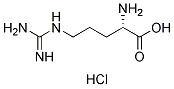
Structure chimique
Poids moléculaire: 210.66
Contrôle Qualité (Quality Control)
| Cibles apparentées | PD-1/PD-L1 CXCR STING AhR Immunology & Inflammation related CD markers Interleukins Anti-infection Antioxidant COX |
|---|---|
| Autre NOS Inhibiteurs | L-NAME HCl 1400W 2HCl (3R,8S)-Falcarindiol TPEN L-NMMA acetate 2',5'-Dihydroxyacetophenone 6-Biopterin ZLc002 Hederagenin 7-Nitroindazole |
Informations chimiques, stockage et stabilité (Chemical Information, Storage & Stability)
| Poids moléculaire | 210.66 | Formule | C6H14N4O2.HCl |
Stockage (À compter de la date de réception) | |
|---|---|---|---|---|---|
| N° CAS | 1119-34-2 | Télécharger le SDF | Stockage des solutions mères |
|
|
| Synonymes | (S)-(+)-Arginine hydrochloride | Smiles | C(CC(C(=O)O)N)CN=C(N)N.Cl | ||
Solubilité (Solubility)
|
In vitro |
Water : 42 mg/mL
DMSO
: Insoluble
Ethanol : Insoluble |
Calculateur de molarité
|
In vivo |
|||||
Calculateur de formulation in vivo (Solution claire)
Étape 1 : Saisir les informations ci-dessous (Recommandé : Un animal supplémentaire pour tenir compte des pertes pendant l'expérience)
Étape 2 : Saisir la formulation in vivo (Ceci est seulement le calculateur, pas la formulation. Veuillez nous contacter d'abord s'il n'y a pas de formulation in vivo dans la section Solubilité.)
Résultats du calcul :
Concentration de travail : mg/ml;
Méthode de préparation du liquide maître DMSO : mg médicament prédissous dans μL DMSO ( Concentration du liquide maître mg/mL, Veuillez nous contacter d'abord si la concentration dépasse la solubilité du DMSO du lot de médicament. )
Méthode de préparation de la formulation in vivo : Prendre μL DMSO liquide maître, puis ajouterμL PEG300, mélanger et clarifier, puis ajouterμL Tween 80, mélanger et clarifier, puis ajouter μL ddH2O, mélanger et clarifier.
Méthode de préparation de la formulation in vivo : Prendre μL DMSO liquide maître, puis ajouter μL Huile de maïs, mélanger et clarifier.
Note : 1. Veuillez vous assurer que le liquide est clair avant d'ajouter le solvant suivant.
2. Assurez-vous d'ajouter le(s) solvant(s) dans l'ordre. Vous devez vous assurer que la solution obtenue, lors de l'ajout précédent, est une solution claire avant de procéder à l'ajout du solvant suivant. Des méthodes physiques telles que le vortex, les ultrasons ou le bain-marie chaud peuvent être utilisées pour faciliter la dissolution.
Mécanisme d'action (Mechanism of Action)
| In vitro |
L-Arginine HCl (L-Arg) supplementation (0.3 mM, 30 minutes) does not induce any significant increases in the peak NO concentration at low level of native LDL. However, at native LDL concentrations from 60-130 mg cholesterol/dL, NO concentration is 2 times higher than before treatment in bovine aortic endothelial cells. This compound results in a significant increase of NO production in n-LDL–treated cells as well as in oxidized -LDL–treated cells in the same cell type. It does not increase O2- concentration at low nativeLDL concentrations but reduces O2- production by 50% when incubated with n-LDL at concentrations >40 mg cholesterol/dL. Furthermore, it completely abolishes O2- production at every oxidized LDL dosage in bovine aortic endothelial cells. |
|---|---|
| In vivo |
L-Arginine HCl (L-Arg) (4 mg/kg/min for 1 hour) treatment decreases superoxide generation by cNOS while increasing NO accumulation in rabbit limb during ischemia/reperfusion. This compound prevents microvessel constriction in the reperfused muscle despite reduced but still apparent interstitial edema in rabbit limb, and results in a significant reduction of muscular reperfusion edema in rabbit limb. Its supplementation (0.1 g/kg, oral) significantly reduces pulmonary artery systolic pressure by a mean of 15.2% after 5 days of therapy in patients with sickle cell disease. Both L-Arginine and ornithine concentrations increased significantly after 5 days of oral supplementation in patients with sickle cell disease. It is associated with a decrease in cardiac index while stroke index is maintained in patients with severe sepsis. Resolution of shock at 72 hours is achieved by 40% and 24% of the patients in the L-Arginine and placebo cohorts, respectively. This compound (450 mg/kg during a 15-minute period) amplifies and sustains the hyperemia (38%) and increases absolute brain blood flow after eNOS upregulation by chronic simvastatin treatment (2 mg/kg subcutaneously, daily for 14 days) in SV-129 mice. |
Références |
|
Informations sur l'essai clinique (Clinical Trial Information)
(données du https://clinicaltrials.gov, mis à jour le 2025-09-17)
| Numéro NCT | Recrutement | Conditions | Promoteur/Collaborateurs | Date de début | Phases |
|---|---|---|---|---|---|
| NCT06860724 | RECRUITING | Major Depressive Disorder |
University of Delaware |
2025-01-06 | |
| NCT07772882 | NOT_YET_RECRUITING | Platinum Resistant Ovarian Cancer; Fallopian Tube Cancers; Peritoneal Carcinoma |
Rebecca Arend |
2026-09 | PHASE1 |
| NCT04800692 | ACTIVE_NOT_RECRUITING | Claudication, Intermittent; Peripheral Artery Disease; Peripheral Vascular Diseases |
Louis Messina |
2021-06-15 | PHASE1 |
| NCT07394270 | NOT_YET_RECRUITING | Heart Failure |
German University in Cairo |
2026-02 | PHASE2 |
| NCT03982160 | ACTIVE_NOT_RECRUITING | Chronic Kidney Disease |
The University of Texas at Arlington |
2018-02-01 | PHASE4 |
| NCT07150806 | RECRUITING | Recurrent Meningioma |
Joshua Palmer |
2025-11-12 | PHASE1; PHASE2 |

Les produits sont destinés à la recherche uniquement. Ne pas utiliser chez l'homme. Nous ne vendons pas aux patients.
©Copyright 2013 Selleck Chemicals. Tous droits réservés.