
pour la recherche uniquement
Sapanisertib (MLN0128, INK-128) mTOR inhibiteur
Réf. CatalogueS2811
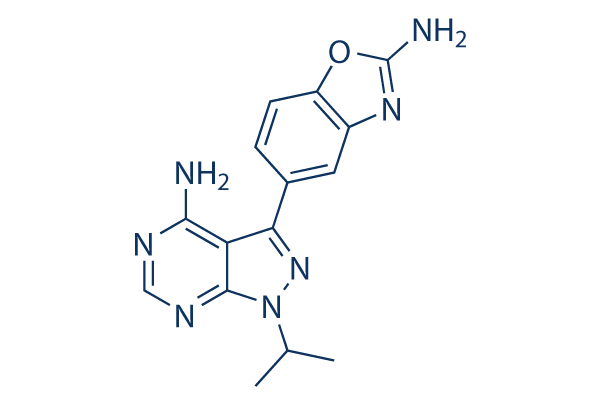
Structure chimique
Poids moléculaire: 309.33
Contrôle Qualité
| Cibles apparentées | PI3K Akt GSK-3 ATM/ATR DNA-PK AMPK PDPK1 PTEN PP2A PDK |
|---|---|
| Autre mTOR Inhibiteurs | Torin 1 Torin 2 AZD8055 Ridaforolimus (Deforolimus, MK-8669) Torkinib (PP242) MHY1485 Vistusertib (AZD2014) KU-0063794 OSI-027 WYE-354 |
Culture cellulaire, traitement et concentration de travail
| Lignées cellulaires | Type dessai | Concentration | Temps dincubation | Formulation | Description de lactivité | PMID |
|---|---|---|---|---|---|---|
| U87 | Function assay | Inhibition of mTOR in human U87 cells assessed as reduction in p4EBP1 phosphorylation by Western blot method | ChEMBL | |||
| U87 | Function assay | Inhibition of mTOR in human U87 cells assessed as reduction in pAKT phosphorylation at residue 47 by Western blot method | ChEMBL | |||
| PC3 | Antiproliferative assay | 72 hrs | Antiproliferative activity against human PC3 cells measured after 72 hrs by Alamar blue dye-based fluorescence analysis, EC50 = 0.1 μM. | ChEMBL | ||
| SKOV3 | Function assay | 1 hr | Inhibition of TORC2 in human SKOV3 cells assessed as decrease in PKB/Akt phosphorylation at Ser473 after 1 hr by Western blot analysis | 30359003 | ||
| A2058 | Function assay | 1 hr | Inhibition of TORC1 in human A2058 cells assessed as decrease in S6K phosphorylation after 1 hr by Western blot analysis | 30359003 | ||
| SKOV3 | Function assay | 1 hr | Inhibition of TORC1 in human SKOV3 cells assessed as decrease in S6K phosphorylation after 1 hr by Western blot analysis | 30359003 | ||
| SKOV3 | Function assay | 1 hr | Inhibition of TORC1 in human SKOV3 cells assessed as decrease in S6 phosphorylation at Ser235/236 after 1 hr by Western blot analysis | 30359003 | ||
| SKOV3 | Function assay | 1 hr | Inhibition of TORC1 in human SKOV3 cells assessed as decrease in 4E-BP1 phosphorylation after 1 hr by Western blot analysis | 30359003 | ||
| A2058 | Function assay | 1 hr | Inhibition of TORC1 in human A2058 cells assessed as decrease in 4E-BP1 phosphorylation after 1 hr by Western blot analysis | 30359003 | ||
| A2058 | Function assay | 1 hr | Inhibition of TORC1 in human A2058 cells assessed as decrease in S6 phosphorylation at Ser235/236 after 1 hr by Western blot analysis | 30359003 | ||
| A2058 | Function assay | 1 hr | Inhibition of TORC2 in human A2058 cells assessed as decrease in PKB/Akt phosphorylation at Ser473 after 1 hr by Western blot analysis | 30359003 | ||
| Saos-2 | qHTS assay | qHTS of pediatric cancer cell lines to identify multiple opportunities for drug repurposing: Confirmatory screen for Saos-2 cells | 29435139 | |||
| Rh18 | qHTS assay | qHTS of pediatric cancer cell lines to identify multiple opportunities for drug repurposing: Confirmatory screen for Rh18 cells | 29435139 | |||
| TC32 | qHTS assay | qHTS of pediatric cancer cell lines to identify multiple opportunities for drug repurposing: Confirmatory screen for TC32 cells | 29435139 | |||
| SJ-GBM2 | qHTS assay | qHTS of pediatric cancer cell lines to identify multiple opportunities for drug repurposing: Confirmatory screen for SJ-GBM2 cells | 29435139 | |||
| SK-N-MC | qHTS assay | qHTS of pediatric cancer cell lines to identify multiple opportunities for drug repurposing: Confirmatory screen for SK-N-MC cells | 29435139 | |||
| Rh18 | qHTS assay | qHTS of pediatric cancer cell lines to identify multiple opportunities for drug repurposing: Primary screen for Rh18 cells | 29435139 | |||
| LAN-5 | qHTS assay | qHTS of pediatric cancer cell lines to identify multiple opportunities for drug repurposing: Primary screen for LAN-5 cells | 29435139 | |||
| NB-EBc1 | qHTS assay | qHTS of pediatric cancer cell lines to identify multiple opportunities for drug repurposing: Primary screen for NB-EBc1 cells | 29435139 | |||
| SK-N-MC | qHTS assay | qHTS of pediatric cancer cell lines to identify multiple opportunities for drug repurposing: Primary screen for SK-N-MC cells | 29435139 | |||
| SJ-GBM2 | qHTS assay | qHTS of pediatric cancer cell lines to identify multiple opportunities for drug repurposing: Primary screen for SJ-GBM2 cells | 29435139 | |||
| RD | qHTS assay | qHTS of pediatric cancer cell lines to identify multiple opportunities for drug repurposing: Confirmatory screen for RD cells | 29435139 | |||
| Rh41 | qHTS assay | qHTS of pediatric cancer cell lines to identify multiple opportunities for drug repurposing: Confirmatory screen for Rh41 cells | 29435139 | |||
| OHS-50 | qHTS assay | qHTS of pediatric cancer cell lines to identify multiple opportunities for drug repurposing: Confirmatory screen for OHS-50 cells | 29435139 | |||
| U-2 OS | qHTS assay | qHTS of pediatric cancer cell lines to identify multiple opportunities for drug repurposing: Confirmatory screen for U-2 OS cells | 29435139 | |||
| Rh30 | qHTS assay | qHTS of pediatric cancer cell lines to identify multiple opportunities for drug repurposing: Confirmatory screen for Rh30 cells | 29435139 | |||
| MG 63 (6-TG R) | qHTS assay | qHTS of pediatric cancer cell lines to identify multiple opportunities for drug repurposing: Confirmatory screen for MG 63 (6-TG R) cells | 29435139 | |||
| Rh30 | qHTS assay | qHTS of pediatric cancer cell lines to identify multiple opportunities for drug repurposing: Primary screen for Rh30 cells | 29435139 | |||
| BT-37 | qHTS assay | qHTS of pediatric cancer cell lines to identify multiple opportunities for drug repurposing: Confirmatory screen for BT-37 cells | 29435139 | |||
| A673 | qHTS assay | qHTS of pediatric cancer cell lines to identify multiple opportunities for drug repurposing: Confirmatory screen for A673 cells) | 29435139 | |||
| Rh41 | qHTS assay | qHTS of pediatric cancer cell lines to identify multiple opportunities for drug repurposing: Primary screen for Rh41 cells | 29435139 | |||
| SK-N-SH | qHTS assay | qHTS of pediatric cancer cell lines to identify multiple opportunities for drug repurposing: Confirmatory screen for SK-N-SH cells | 29435139 | |||
| DAOY | qHTS assay | qHTS of pediatric cancer cell lines to identify multiple opportunities for drug repurposing: Confirmatory screen for DAOY cells | 29435139 | |||
| LAN-5 | qHTS assay | qHTS of pediatric cancer cell lines to identify multiple opportunities for drug repurposing: Confirmatory screen for LAN-5 cells | 29435139 | |||
| OHS-50 | qHTS assay | qHTS of pediatric cancer cell lines to identify multiple opportunities for drug repurposing: Primary screen for OHS-50 cells | 29435139 | |||
| BT-12 | qHTS assay | qHTS of pediatric cancer cell lines to identify multiple opportunities for drug repurposing: Confirmatory screen for BT-12 cells | 29435139 | |||
| MG 63 (6-TG R) | qHTS assay | qHTS of pediatric cancer cell lines to identify multiple opportunities for drug repurposing: Primary screen for MG 63 (6-TG R) cells | 29435139 | |||
| BT-12 | qHTS assay | qHTS of pediatric cancer cell lines to identify multiple opportunities for drug repurposing: Primary screen for BT-12 cells | 29435139 | |||
| SK-N-SH | qHTS assay | qHTS of pediatric cancer cell lines to identify multiple opportunities for drug repurposing: Primary screen for SK-N-SH cells | 29435139 | |||
| RD | qHTS assay | qHTS of pediatric cancer cell lines to identify multiple opportunities for drug repurposing: Primary screen for RD cells | 29435139 | |||
| BT-37 | qHTS assay | qHTS of pediatric cancer cell lines to identify multiple opportunities for drug repurposing: Primary screen for BT-37 cells | 29435139 | |||
| Saos-2 | qHTS assay | qHTS of pediatric cancer cell lines to identify multiple opportunities for drug repurposing: Primary screen for Saos-2 cells | 29435139 | |||
| DAOY | qHTS assay | qHTS of pediatric cancer cell lines to identify multiple opportunities for drug repurposing: Primary screen for DAOY cells | 29435139 | |||
| A673 | qHTS assay | qHTS of pediatric cancer cell lines to identify multiple opportunities for drug repurposing: Primary screen for A673 cells | 29435139 | |||
| U-2 OS | qHTS assay | qHTS of pediatric cancer cell lines to identify multiple opportunities for drug repurposing: Primary screen for U-2 OS cells | 29435139 | |||
| TC32 | qHTS assay | qHTS of pediatric cancer cell lines to identify multiple opportunities for drug repurposing: Primary screen for TC32 cells | 29435139 | |||
| PANC-1 | Cell Viability Assay | 1-100 nM | 72 h | inhibits cell viability dose dependently | 24971544 | |
| PANC-1 | Cell Viability Assay | 50 nM | 24-96 h | inhibits cell viability time dependently | 24971544 | |
| MIA PaCa-2 | Cell Viability Assay | 1-100 nM | 72 h | inhibits cell viability dose dependently | 24971544 | |
| PANC-1 | Apoptosis Assay | 10-100 nM | 72 h | induces apoptosis dose dependently | 24971544 | |
| PANC-1 | Function Assay | 10/50 nM | 24 h | dramatically inhibits phosphorylation of 4E-BP1-S6K1 (mTORC1 activation indicators) and Akt at Ser 473 (the mTORC2 activation indicator) | 24971544 | |
| PANC-1 | Function Assay | 10 nM | 72 h | increases LY 188011 sensitivity | 24971544 | |
| PANC-1 | Function Assay | 50 nM | 48 h | disrupts cell cycle progression | 24971544 | |
| U87 | Function assay | Inhibition of mTOR pS6K in human U87 cells assessed as inhibition of 4EBP1 phosphorylation by Western blot analysis | ChEMBL | |||
| U87 | Function assay | Inhibition of mTOR in human U87 cells assessed as reduction in pRAS40 phosphorylation by Western blot method | ChEMBL | |||
| U87 | Function assay | Inhibition of mTOR pS6K in human U87 cells assessed as inhibition of RAS40 phosphorylation by Western blot analysis | ChEMBL | |||
| U87 | Antitumor assay | 0.3 to 3 mg/kg | 14 days | Antitumor activity against human U87 cells xenografted in mouse assessed as tumor growth inhibition at 0.3 to 3 mg/kg measured after 14 days | ChEMBL | |
| Cliquez pour voir plus de données expérimentales sur la lignée cellulaire | ||||||
Informations chimiques, stockage et stabilité
| Poids moléculaire | 309.33 | Formule | C15H15N7O |
Stockage (À compter de la date de réception) | |
|---|---|---|---|---|---|
| N° CAS | 1224844-38-5 | Télécharger le SDF | Stockage des solutions mères |
|
|
| Synonymes | INK 128,TAK-228 | Smiles | CC(C)N1C2=NC=NC(=C2C(=N1)C3=CC4=C(C=C3)OC(=N4)N)N | ||
Solubilité
|
In vitro |
DMSO
: 62 mg/mL
(200.43 mM)
Ethanol : 2 mg/mL Water : Insoluble |
Calculateur de molarité
|
In vivo |
|||||
Calculateur de formulation in vivo (Solution claire)
Étape 1 : Saisir les informations ci-dessous (Recommandé : Un animal supplémentaire pour tenir compte des pertes pendant lexpérience)
Étape 2 : Saisir la formulation in vivo (Ceci est seulement le calculateur, pas la formulation. Veuillez nous contacter dabord sil ny a pas de formulation in vivo dans la section Solubilité.)
Résultats du calcul :
Concentration de travail : mg/ml;
Méthode de préparation du liquide maître DMSO : mg médicament prédissous dans μL DMSO ( Concentration du liquide maître mg/mL, Veuillez nous contacter dabord si la concentration dépasse la solubilité du DMSO du lot de médicament. )
Méthode de préparation de la formulation in vivo : Prendre μL DMSO liquide maître, puis ajouterμL PEG300, mélanger et clarifier, puis ajouterμL Tween 80, mélanger et clarifier, puis ajouter μL ddH2O, mélanger et clarifier.
Méthode de préparation de la formulation in vivo : Prendre μL DMSO liquide maître, puis ajouter μL Huile de maïs, mélanger et clarifier.
Note : 1. Veuillez vous assurer que le liquide est clair avant dajouter le solvant suivant.
2. Assurez-vous dajouter le(s) solvant(s) dans lordre. Vous devez vous assurer que la solution obtenue, lors de lajout précédent, est une solution claire avant de procéder à lajout du solvant suivant. Des méthodes physiques telles que le vortex, les ultrasons ou le bain-marie chaud peuvent être utilisées pour faciliter la dissolution.
Mécanisme daction
| Targets/IC50/Ki |
mTOR
(Cell-free assay) 1.4 nM(Ki)
mTOR
(Cell-free assay) 1.4 nM(Ki)
PI3Kα
(Cell-free assay) 219 nM
PI3Kγ
(Cell-free assay) 221 nM
PI3Kδ
(Cell-free assay) 230 nM
PI3Kβ
(Cell-free assay) 5293 nM
|
|---|---|
| In vitro |
INK 128 présente une activité d'inhibition enzymatique contre mTOR et une sélectivité plus de 100 fois supérieure aux kinases PI3K. En tant qu'inhibiteur de TORC1/2, INK 128 inhibe à la fois la phosphorylation de S6 et de 4EBP1, les substrats en aval de TORC1, et inhibe sélectivement la phosphorylation d'AKT à Ser473, le substrat en aval de TORC2. De plus, INK 128 montre également de puissants effets inhibiteurs sur les lignées cellulaires résistantes à la rapamycine et aux inhibiteurs pan-PI3K. |
| In vivo |
Dans un modèle de xénogreffe de cancer du sein ZR-75-1, INK 128 montre une efficacité d'inhibition de la croissance tumorale à une dose de 0,3 mg/kg/jour. L'administration orale quotidienne d'INK 128 inhibe l'angiogenèse et la croissance tumorale dans des modèles de multiplexenogreffes. |
Références |
|
Applications
| Méthodes | Biomarqueurs | Images | PMID |
|---|---|---|---|
| Western blot | p-4EBP1 / 4EBP1 / p-S6 / S6 / p-Akt-S473 / p-Akt-T308 / Akt CD44 / Vimentin c-Jun p-mTOR(Ser2448) / mTOR / p-p70S6K(Thr389) / p70S6K / p-RPS / RPS6 FKBP1 / MARS / CDC25A / TCL1A |
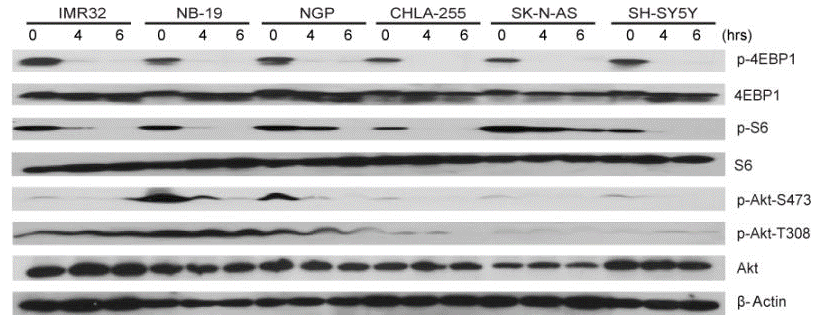
|
25425103 |
| Growth inhibition assay | Cell viability |
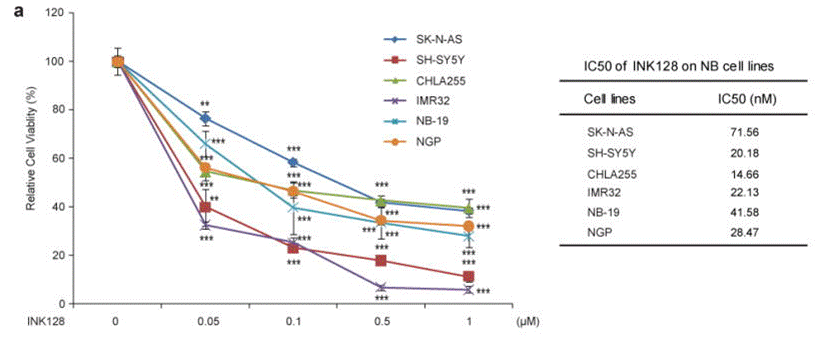
|
25425103 |
Informations sur lessai clinique
(données du https://clinicaltrials.gov, mis à jour le 2024-05-22)
| Numéro NCT | Recrutement | Conditions | Promoteur/Collaborateurs | Date de début | Phases |
|---|---|---|---|---|---|
| NCT04250545 | Recruiting | Leptomeningeal Neoplasm|Metastatic Lung Non-Small Cell Carcinoma|Metastatic Malignant Neoplasm in the Brain|Recurrent Lung Non-Small Cell Carcinoma|Stage IV Lung Cancer AJCC v8|Stage IVA Lung Cancer AJCC v8|Stage IVB Lung Cancer AJCC v8 |
National Cancer Institute (NCI) |
October 26 2020 | Phase 1 |
| NCT02575339 | Terminated | Hepatocellular Carcinoma|Liver Cancer|HCC |
Kathy Miller|Millennium Pharmaceuticals Inc.|Big Ten Cancer Research Consortium |
July 18 2016 | Phase 1|Phase 2 |
| NCT02719691 | Completed | Metastatic Breast Cancer|Solid Tumors |
University of Colorado Denver |
May 13 2016 | Phase 1 |
| NCT02514824 | Completed | Merkel Cell Carcinoma |
Dana-Farber Cancer Institute|Millennium Pharmaceuticals Inc. |
October 2015 | Phase 1|Phase 2 |
Support technique
Tel: +1-832-582-8158 Ext:3
Si vous avez dautres questions, veuillez laisser un message.
Foire aux questions
Question 1:
What is the recommendation method to formulate it for oral administration?
Réponse :
For oral administration, it can be tried with this vehicle: 30% PEG400+0.5% Tween80 +5% Propylene glycol.

Les produits sont destinés à la recherche uniquement. Ne pas utiliser chez lhomme. Nous ne vendons pas aux patients.
©Copyright 2013 Selleck Chemicals. Tous droits réservés.