
pour la recherche uniquement
Zoledronic acid (Zoledronate) Inhibiteur de la résorption osseuse
Réf. Catalogue: S1314
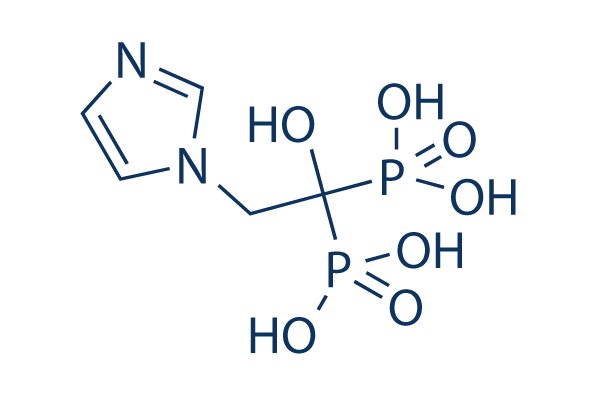
Structure chimique
Poids moléculaire: 272.09
Contrôle Qualité (Quality Control)
| Cibles apparentées | Bcl-2 Caspase PD-1/PD-L1 Ferroptosis p53 Synthetic Lethality STAT TNF-alpha Ras KRas |
|---|---|
| Autre Apoptosis related Inhibiteurs | Importazole Plumbagin Pitstop 2 Genipin 6-Gingerol Cobalt chloride Colcemid Crocin Protocatechuic acid CWI1-2 hydrochloride |
Culture cellulaire, traitement et concentration de travail
(Cell Culture, Treatment & Working Concentration)
| Lignées cellulaires | Type d'essai | Concentration | Temps d'incubation | Formulation | Description de l'activité | PMID |
|---|---|---|---|---|---|---|
| human NCI-H460 cell | Proliferation assay | Antiproliferative activity against human NCI-H460 cell line by MTT assay, IC50=11.7 μM | 16970405 | |||
| human SF-268 cell | Proliferation assay | Antiproliferative activity against human SF-268 cell line by MTT assay, IC50=14.3 μM | 16970405 | |||
| Gamma delta T cells | Function assay | Effective concentration against human Gamma delta T cells, EC50=5.4μM | 15828834 | |||
| HFF cells | Function assay | In vitro inhibitory concentration against the growth of Toxoplasma gondii in human foreskin fibroblast monolayer cells (HFF cells), IC50=0.79μM | 15857119 | |||
| HFF cells | Function assay | Inhibitory concentration against the growth of Toxoplasma gondii overexpressing FPPS enzyme in human foreskin fibroblast monolayer cells; (control = 0.60 uM, experiment 1), IC50=7.8μM | 15857119 | |||
| HFF cells | Function assay | Inhibitory concentration against the growth of Toxoplasma gondii overexpressing FPPS enzyme in human foreskin fibroblast monolayer cells; (control = 0.79 uM, experiment 3), IC50=7.8μM | 15857119 | |||
| HFF cells | Function assay | Inhibitory concentration against the growth of Toxoplasma gondii overexpressing FPPS enzyme in human foreskin fibroblast monolayer cells; (control = 1.1 uM, experiment 2), IC50=8.3μM | 15857119 | |||
| BT-549 | Antitumor assay | Antitumor activity against human BT-549 cells xenografted SCID mouse co-transfected with human gamma delta T lymphocytes assessed as survival time prolongation at 2 ug, ip coadministered with human recombinant IL2 | 18937434 | |||
| BT-549 | Antitumor assay | Antitumor activity against human BT-549 cells xenografted SCID mouse co-transfected with human gamma delta T lymphocytes assessed as survival time prolongation at 5 ug, ip coadministered with human recombinant IL2 | 18937434 | |||
| BL21(DE3) | Function assay | 30 mins | Inhibition of His6-tagged human truncated FPPS (6-353) expressed in Escherichia coli BL21(DE3) cells using geranyl diphosphate and isopentenyl diphosphate as substrate preincubated with enzyme for 30 mins by spectrophotometric analysis, IC50=0.1μM | 23610597 | ||
| BL2-codon plus (DE3) RIL | Function assay | 30 mins | Inhibition of N-terminal His6-tagged Plasmodium vivax GGPPS expressed in Escherichia coli BL2-codon plus (DE3) RIL cells using geranyl diphosphate and isopentenyl diphosphate as substrate preincubated with enzyme for 30 mins by spectrophotometric analysis, IC50=0.13μM | 23610597 | ||
| RPMI8226 | Cytotoxicity assay | 72 hrs | Cytotoxicity against human RPMI8226 cells after 72 hrs by MTT assay, EC50=11μM | 23998921 | ||
| J774 | Cytotoxicity assay | Cytotoxicity against mouse J774 cells assessed as reduction in cell viability, IC50=7.8μM | 24813742 | |||
| MCF7 | Antiproliferative assay | 72 hrs | Antiproliferative activity against human MCF7 cells after 72 hrs by MTT assay, IC50=23μM | 24928399 | ||
| Vgamma9/Vdelta2 T-cells | Function assay | 18 hrs | Binding affinity to butyrophilin 3A1 in human Vgamma9/Vdelta2 T-cells assessed as activation of Vgamma9/Vdelta2 T-cells by upregulation of CD69 and CD25 after 18 hrs, EC50=0.4866μM | 29457898 | ||
| RPMI8226 | Antiproliferative assay | 72 hrs | Antiproliferative activity against human RPMI8226 cells after 72 hrs by MTT assay, EC50=11μM | 30016091 | ||
| RPMI8226 | Function assay | 0.5 uM | Inhibition of GGPPS in human RPMI8226 cells assessed as reduction in Rap1A prenylation at 0.5 uM by Western blot analysis | 30016091 | ||
| J774A.1 | Antiproliferative assay | 100 uM | 72 hrs | Antiproliferative activity against mouse J774A.1 cells assessed as reduction in cell viability at 100 uM after 72 hrs by WST8 assay | 30216851 | |
| RAW264.7 | Antiproliferative assay | 100 uM | 72 hrs | Antiproliferative activity against mouse RAW264.7 cells assessed as reduction in cell viability at 100 uM after 72 hrs by WST8 assay | 30216851 | |
| MG63 | Antiproliferative assay | 100 uM | 72 hrs | Antiproliferative activity against human MG63 cells assessed as reduction in cell viability at 100 uM after 72 hrs by WST8 assay | 30216851 | |
| PC3 | Antiproliferative assay | 100 uM | 72 hrs | Antiproliferative activity against human PC3 cells assessed as reduction in cell viability at 100 uM after 72 hrs by WST8 assay | 30216851 | |
| RAW264.7 | Antiproliferative assay | 100 uM | 72 hrs | Antiproliferative activity against RANKL-differentiated mouse RAW264.7 cells assessed as reduction in cell viability at 100 uM after 72 hrs by CCK8 assay | 30216851 | |
| RAW264.7 | Function assay | 72 hrs | Inhibition of RANKL-induced osteoclastogenesis in mouse RAW264.7 cells after 72 hrs by TRAP staining based microscopic analysis | 30216851 | ||
| MC3T3-E1 | Function assay | 30 to 50 nM | 10 to 15 days | Induction of mineralization in mouse MC3T3-E1 cells at 30 to 50 nM after 10 to 15 days by alizarin red dye based assay | 30216851 | |
| C57BL mouse bone marrow cells | Function assay | 50 nM | 10 to 15 days | Induction of mineralization in C57BL mouse bone marrow cells at 50 nM supplemented with fresh medium containing compound every 3 days for 10 to 15 days by alizarin red dye based assay | 30216851 | |
| C57BL mouse bone marrow cells/human PC3 cells | Function assay | 50 to 100 nM | 10 to 15 days | Induction of mineralization in C57BL mouse bone marrow cells co-cultured with human PC3 cells at 50 to 100 nM supplemented with fresh medium containing compound every 3 days for 10 to 15 days by alizarin red dye based assay | 30216851 | |
| K562 | Function assay | 240 mins | Activation of butyrophilin 3A1 in human K562 cells assessed as interferon-gamma production pretreated for 240 mins followed by HMBPP-treated Vgamma9Vdelta2 T cells addition and measured after 20 hrs by ELISA, EC50=23μM | 31531198 | ||
| MIAPaCa2 | Cytotoxicity assay | 72 hrs | Cytotoxicity against human MIAPaCa2 cells assessed as decrease in cell growth measured after 72 hrs by MTT assay, EC50=13.4μM | 31725297 | ||
| PANC1 | Cytotoxicity assay | 72 hrs | Cytotoxicity against human PANC1 cells assessed as decrease in cell growth measured after 72 hrs by MTT assay, EC50=16.1μM | 31725297 | ||
| Cliquez pour voir plus de données expérimentales sur la lignée cellulaire | ||||||
Informations chimiques, stockage et stabilité (Chemical Information, Storage & Stability)
| Poids moléculaire | 272.09 | Formule | C5H10N2O7P2 |
Stockage (À compter de la date de réception) | |
|---|---|---|---|---|---|
| N° CAS | 118072-93-8 | Télécharger le SDF | Stockage des solutions mères |
|
|
| Synonymes | ZA, CGP-4244, GP42446A, ZOL 446 | Smiles | C1=CN(C=N1)CC(O)(P(=O)(O)O)P(=O)(O)O | ||
Solubilité (Solubility)
|
In vitro |
0.1M NAOH : 25 mg/mL (Ultrasonic and heating for 5 minutes.) Water : 0.5 mg/mL (Warmed with 50℃ water bath; Ultrasonicated)
DMSO
: Insoluble
|
Calculateur de molarité
|
In vivo |
|||||
Calculateur de formulation in vivo (Solution claire)
Étape 1 : Saisir les informations ci-dessous (Recommandé : Un animal supplémentaire pour tenir compte des pertes pendant l'expérience)
Étape 2 : Saisir la formulation in vivo (Ceci est seulement le calculateur, pas la formulation. Veuillez nous contacter d'abord s'il n'y a pas de formulation in vivo dans la section Solubilité.)
Résultats du calcul :
Concentration de travail : mg/ml;
Méthode de préparation du liquide maître DMSO : mg médicament prédissous dans μL DMSO ( Concentration du liquide maître mg/mL, Veuillez nous contacter d'abord si la concentration dépasse la solubilité du DMSO du lot de médicament. )
Méthode de préparation de la formulation in vivo : Prendre μL DMSO liquide maître, puis ajouterμL PEG300, mélanger et clarifier, puis ajouterμL Tween 80, mélanger et clarifier, puis ajouter μL ddH2O, mélanger et clarifier.
Méthode de préparation de la formulation in vivo : Prendre μL DMSO liquide maître, puis ajouter μL Huile de maïs, mélanger et clarifier.
Note : 1. Veuillez vous assurer que le liquide est clair avant d'ajouter le solvant suivant.
2. Assurez-vous d'ajouter le(s) solvant(s) dans l'ordre. Vous devez vous assurer que la solution obtenue, lors de l'ajout précédent, est une solution claire avant de procéder à l'ajout du solvant suivant. Des méthodes physiques telles que le vortex, les ultrasons ou le bain-marie chaud peuvent être utilisées pour faciliter la dissolution.
Mécanisme d'action (Mechanism of Action)
| Targets/IC50/Ki |
Rho
(Cell-free assay) Ras
|
|---|---|
| In vitro |
Zoledronic acid (Zoledronate) (10 µM and 100 µM) causes a significant reduction in the proportions of MCF-7 cells (49.54% and 23.55% of control, respectively) (P < 0.05). It has little effect on MDA-MB-231 cells at concentrations of 0.1–10 µM, whereas the 100 µM concentration results in a significant reduction in cell number. This compound (100 µM) results in a 63.5% reduction in MCF-7 cell number at 72 hours and an 87.1% reduction at 96 hours. It (10 µM) results in a greater than 4-fold increase in MCF-7 cell apoptosis whereas the 100 µM concentration induces a 6-fold increase in the proportion of apoptotic cells. When combined with paclitaxel (2 µM), it (10 µM) results in a 5-fold increase in apoptosis (774.8% of control) compared to zoledronic acid alone (155.71%) and a 4-fold increase compared to paclitaxel alone (189.68%). Its induced apoptosis of MCF-7 breast cancer cells can be inhibited by addition of intermediates of the mevalonate pathway, which is consistent with observations in osteoclasts, macrophages and myeloma cells. It enhances OPG gene expression and protein secretion by human osteoblasts (hOB) in a dose-dependent fashion with a maximum effect at 10 nM after 72 hours, consistent with the higher biological potency of Zoledronic acid. This compound prevents the inhibitory effects of the glucocorticoid dexamethasone on OPG mRNA and protein production in human osteoblasts. It induces type I collagen secretion and alkaline phosphatase activity by 2- and 4-fold, respectively, in human osteoblasts. |
| In vivo |
Zoledronic acid (Zoledronate) (120 ug/kg, s.c.) prevents the formation of lesions, prevents cancellous bone loss and loss of bone mineral density, and reduces osteoclast perimeter in 5T2MM-bearing mice. It (120 mg/kg, s.c.) also decreases paraprotein concentration, decreases tumor burden, and reduces angiogenesis in 5T2MM-bearing mice. |
Références |
|
Applications (Applications)
| Méthodes | Biomarqueurs | Images | PMID |
|---|---|---|---|
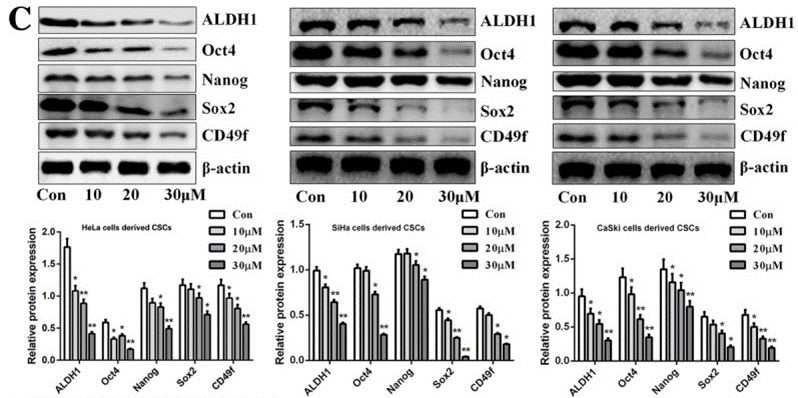
| Western blot | ALDH1 / Oct4 / Nanog / Sox2 / CD49f N-cadherin / E-cadherin / Vimentin |
|
30791957 |
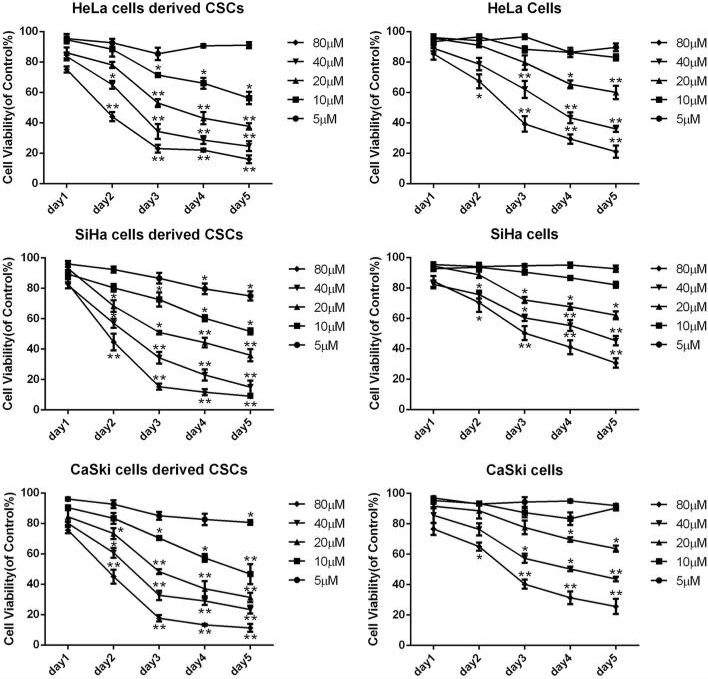
| Growth inhibition assay | Cell viability |
|
30791957 |
Informations sur l'essai clinique (Clinical Trial Information)
(données du https://clinicaltrials.gov, mis à jour le 2026-04-20)
| Numéro NCT | Recrutement | Conditions | Promoteur/Collaborateurs | Date de début | Phases |
|---|---|---|---|---|---|
| NCT06374459 | RECRUITING | Hormone Receptor Positive HER-2 Negative Metastatic Breast Cancer |
Washington University School of Medicine |
2025-01-30 | PHASE1; PHASE2 |
| NCT06767150 | RECRUITING | Postmenopausal Osteoporosis |
University Hospital, Toulouse |
2025-10-02 | PHASE4 |
| NCT07406685 | RECRUITING | Postmenopausal Osteoporosis; Postmenopausal Osteopenia; Primary Osteoporosis; Osteoporosis |
National Taiwan University Hospital |
2026-08-20 | PHASE4 |
| NCT06059222 | RECRUITING | Osteoporosis |
University of Aarhus |
2023-10-02 | PHASE4 |
| NCT06625190 | RECRUITING | Neuroblastoma; Rhabdomyosarcoma; Synovial Sarcoma; Peripheral Nerve Sheath Tumors; Clear Cell Sarcoma; Alveolar Soft Part Sarcoma; Desmoplastic Small Round Cell Tumor; Chordoma; Rhabdoid Tumor; Epithelioid Sarcoma; Myoepithelial Tumor; Osteosarcoma; Ewing Sarcoma; Wilms Tumor |
University of Florida |
2026-02-11 | PHASE1; PHASE2 |
| NCT07772609 | NOT_YET_RECRUITING | Osteoporosis in Post-menopausal Women |
Sahlgrenska University Hospital |
2027-01-11 | PHASE4 |
Foire aux questions (Frequently Asked Questions)
Question 1:
How can I reconstitute it for in vivo studies?
Réponse :
Please dissolve it directly to 30% PEG400+0.5% Tween80+5% Propylene glycol.

Les produits sont destinés à la recherche uniquement. Ne pas utiliser chez l'homme. Nous ne vendons pas aux patients.
©Copyright 2013 Selleck Chemicals. Tous droits réservés.